---
title: What Do Shopping Mall Security Guards Do?
description: Find out how mall security guards protect shoppers, support tenants, deter crime, and strengthen retail security through advanced technology and preparedness.
image: https://inbound.usisecurity.com/hubfs/AdobeStock_121452180-min.jpeg
---
[](https://usisecurity.com/)
[USI Employee Portal](https://usisecurity.teamehub.com/ehub/Account/Login?ReturnUrl=%2Fehub%2F%3F__hstc%3D66545137.80eef104543518458480a1ad97c0e69c.1720709896513.1720709896513.1720709896513.1%26__hssc%3D66545137.1.1720709896513%26__hsfp%3D3382432651%26hsCtaTracking%3D05f03882-d85f-40b3-8396-f99206c68080%257Cd5bf4266-34d3-4a7e-b6d5-2ef12fc8939b)
[Contact](https://usisecurity.com/contact/) [USI Employee Portal](https://usisecurity.teamehub.com/ehub/Account/Login?ReturnUrl=%2Fehub%2F%3F__hstc%3D66545137.80eef104543518458480a1ad97c0e69c.1720709896513.1720709896513.1720709896513.1%26__hssc%3D66545137.1.1720709896513%26__hsfp%3D3382432651%26hsCtaTracking%3D05f03882-d85f-40b3-8396-f99206c68080%257Cd5bf4266-34d3-4a7e-b6d5-2ef12fc8939b) [Job Postings](https://unitedsecurity.joblinkapply.com/)
-
- [Security Services](https://usisecurity.com/security-services/)
- Security Services
- [Physical Security](https://usisecurity.com/security-services/physical-security/)
- [Unarmed](https://usisecurity.com/services/unarmed-security-officers/)
- [Armed](https://usisecurity.com/armed-security-officers/)
- [Government Security Services](https://usisecurity.com/government-security-services/)
- [Vehicle Patrol Services](https://usisecurity.com/security-services/vehicle-patrol-services/)
- [Concierge Services](https://usisecurity.com/services/concierge-services/)
- [Special Events](https://usisecurity.com/services/special-events/)
- [Executive Protection](https://usisecurity.com/security-services/executive-protection/)
- [Security Advisory](https://usisecurity.com/security-services/security-advisory/)
- [Security Consulting](https://usisecurity.com/security-services/security-consulting/)
- [Specialized Training Programs](https://usisecurity.com/specialized-training-programs/)
- [Global Command Center](https://usisecurity.com/security-services/global-command-center/)
- [Smart Patrol Services](https://usisecurity.com/security-services/smart-patrol-services/)
- [GPS Fleet Monitoring](https://usisecurity.com/services/gps-fleet-monitoring/)
- [24/7 365 Day Client Support](https://usisecurity.com/services/24-7-365-client-support/)
- [Technology](https://usisecurity.com/technology/)
- Our Technology
- [Integrated Solutions](https://usisecurity.com/technology/integrated-solutions/)
- [Access Control](https://usisecurity.com/integrated/access-control/)
- [Video Management](https://usisecurity.com/integrated/video-management/)
- [Intercom and Emergency Call Systems](https://usisecurity.com/technology/intercom-and-emergency-call-systems/)
- [Visitor Management](https://usisecurity.com/integrated/visitor-management/)
- [Remote Monitoring Services](https://usisecurity.com/technology/integrated-solutions/remote-monitoring-services/)
- [Customer Support Offerings](https://usisecurity.com/customer-support-offerings/)
- [USI Product Partners](https://usisecurity.com/usi-product-partners/)
- [Cybersecurity Services](https://usisecurity.com/integrated/cybersecurity-services/)
- [Virtual C-Suite Services](https://usisecurity.com/integrated/virtual-c-suite-services/)
- [Technology & Risk Assessment](https://usisecurity.com/technology/cybersecurity-services/technology-risk-assesment/)
- [Enterprise Architecture Strategy](https://usisecurity.com/technology/cybersecurity-services/enterprise-architecture-strategy/)
- [Data Center (DC) & Cloud Transformation Strategy](https://usisecurity.com/technology/cybersecurity-services/data-center-dc-cloud-transformation-strategy/)
- [Artificial Intelligence (AI), Big Data & Organization Transformation](https://usisecurity.com/technology/cybersecurity-services/artificial-intelligence-ai-big-data-organization-transformation/)
- [Site Reliability Engineering (SRE)](https://usisecurity.com/technology/cybersecurity-services/site-reliability-engineering-sre/)
- [Incident Response](https://usisecurity.com/technology/cybersecurity-services/incident-response/)
- [Disaster Recovery & Business Continuity (DR/BCP)](https://usisecurity.com/technology/cybersecurity-services/disaster-recovery-business-continuity-dr-bcp/)
- [Industries](https://usisecurity.com/industries/)
- Who We Serve
- Security Services For…
- [Corporations](https://usisecurity.com/industries/#corporate-campus)
- [Hospitals / Healthcare Facilities](https://usisecurity.com/industries/#healthcare)
- [Pharmaceutical / Life Sciences](https://usisecurity.com/industries/#life-sciences)
- [Colleges / Universities](https://usisecurity.com/industries/#colleges-universities)
- [Government & State Agencies](https://usisecurity.com/industries/#government-services)
- [Commercial Real Estate](https://usisecurity.com/industries/#commercial-real-estate)
- [Gated Communities](https://usisecurity.com/industries/#gated-communities)
- [Mall / Retail](https://usisecurity.com/industries/#retail-mall-security)
- [About](https://usisecurity.com/about/)
- [History](https://usisecurity.com/about/history/)
- [Mission / Vision / Values](https://usisecurity.com/about/mission-vision-values/)
- [Certified Women-Owned](https://usisecurity.com/about/certified-women-owned/)
- [Management Team](https://usisecurity.com/about/management/)
- [Social Responsibility](https://usisecurity.com/about/social-responsibility/)
- [Quality Assurance](https://usisecurity.com/about/quality-assurance/)
- [Careers](https://usisecurity.com/careers/)
- [Job Openings](https://unitedsecurity.joblinkapply.com/)
- [Culture / Why USI?](https://usisecurity.com/careers/culture-why-usi/)
- [Training](https://usisecurity.com/careers/training/)
- [Employee Benefits](https://usisecurity.com/careers/employee-benefits/)
- [FAQs](https://usisecurity.com/careers/faqs/)
- News
- [Security Industry](https://inbound.usisecurity.com/blog)
- [USI Employees](https://usisecurity.com/usi-employee-news/)
MENU
- [Home](https://usisecurity.com/)
- [Security Services](https://usisecurity.com/security-services/)
- [Physical Security](https://usisecurity.com/security-services/physical-security/)
- [Armed Security Officers](https://usisecurity.com/security-services/armed-security-officers/)
- [Unarmed Security Officers](https://usisecurity.com/security-services/unarmed-security-officers/)
- [Vehicle Patrol Services](https://usisecurity.com/security-services/vehicle-patrol-services/)
- [Concierge Services](https://usisecurity.com/security-services/concierge-services/)
- [Special Events](https://usisecurity.com/security-services/special-events/)
- [Executive Protection](https://usisecurity.com/security-services/executive-protection/)
- [Security Advisory](https://usisecurity.com/security-services/security-advisory/)
- [Security Consulting](https://usisecurity.com/security-services/security-consulting/)
- [Specialized Training Programs](https://usisecurity.com/specialized-training-programs/)
- [Global Command Center](https://usisecurity.com/security-services/global-command-center/)
- [Smart Patrol Services](https://usisecurity.com/security-services/smart-patrol-services/)
- [GPS Fleet Monitoring](https://usisecurity.com/security-services/gps-fleet-monitoring/)
- [24/7 365 Client Support](https://usisecurity.com/security-services/24-7-365-client-support/)
- [Technology](https://usisecurity.com/technology/)
- [Integrated Solutions](https://usisecurity.com/technology/integrated-solutions/)
- [Access Control](https://usisecurity.com/technology/access-control/)
- [Video Management](https://usisecurity.com/technology/video-management/)
- [Intercom and Emergency Call Systems](https://usisecurity.com/technology/intercom-and-emergency-call-systems/)
- [Visitor Management](https://usisecurity.com/technology/visitor-management-systems/)
- [Remote Monitoring Services](https://usisecurity.com/technology/integrated-solutions/remote-monitoring-services/)
- [Customer Support Offerings](https://usisecurity.com/customer-support-offerings/)
- [USI Product Partners](https://usisecurity.com/usi-product-partners/)
- [Cybersecurity Services](https://usisecurity.com/technology/cybersecurity-services/)
- [Virtual C-Suite Services](https://usisecurity.com/technology/virtual-c-suite-services/)
- [Technology & Risk Assesment](https://usisecurity.com/technology/cybersecurity-services/technology-risk-assesment/)
- [Enterprise Architecture Strategy](https://usisecurity.com/technology/cybersecurity-services/enterprise-architecture-strategy/)
- [Data Center (DC) & Cloud Transformation Strategy](https://usisecurity.com/technology/cybersecurity-services/data-center-dc-cloud-transformation-strategy/)
- [Artificial Intelligence (AI), Big Data & Organization Transformation](https://usisecurity.com/technology/cybersecurity-services/artificial-intelligence-ai-big-data-organization-transformation/)
- [Site Reliability Engineering (SRE)](https://usisecurity.com/technology/cybersecurity-services/site-reliability-engineering-sre/)
- [Incident Response](https://usisecurity.com/technology/cybersecurity-services/incident-response/)
- [Disaster Recovery & Business Continuity (DR/BCP)](https://usisecurity.com/technology/cybersecurity-services/disaster-recovery-business-continuity-dr-bcp/)
- [Industries](https://usisecurity.com/industries/)
- [Corporations](https://usisecurity.com/industries/#corporate-campus)
- [Hospitals/Healthcare Facilities](https://usisecurity.com/industries/#healthcare)
- [Pharmaceutical/Life Sciences](https://usisecurity.com/industries/#life-sciences)
- [Colleges/Universities](https://usisecurity.com/industries/#colleges-universities)
- [Government & State Agencies](https://usisecurity.com/industries/#government-services)
- [Commercial Real Estate](https://usisecurity.com/industries/#commercial-real-estate)
- [Gated Communities](https://usisecurity.com/industries/#gated-communities)
- [Mall/Retail](https://usisecurity.com/industries/#retail-mall-security)
- [About](https://usisecurity.com/about/)
- [History](https://usisecurity.com/about/history/)
- [Mission / Vision / Values](https://usisecurity.com/about/mission-vision-values/)
- [Certified Women-Owned](https://usisecurity.com/about/certified-women-owned/)
- [Management Team](https://usisecurity.com/about/management/)
- [Social Responsibility](https://usisecurity.com/about/social-responsibility/)
- [Quality Assurance](https://usisecurity.com/about/quality-assurance/)
- [Careers](https://usisecurity.com/careers/)
- [Job Openings](https://unitedsecurity.joblinkapply.com/)
- [Culture / Why USI?](https://usisecurity.com/careers/culture-why-usi/)
- [Training](https://usisecurity.com/careers/training/)
- [Employee Benefits](https://usisecurity.com/careers/employee-benefits/)
- [FAQs](https://usisecurity.com/careers/faqs/)
- News
- [Security Industry](https://inbound.usisecurity.com/blog)
- [USI Employees](https://usisecurity.com/usi-employee-news/)
# What Do Shopping Mall Security Guards Do?
- Home
- [USI Security Tips](https://inbound.usisecurity.com/blog)
- What Do Shopping Mall Security Guards Do?
[USI Security](https://inbound.usisecurity.com/blog/author/usi-security) 07/27/2026 [Security Officer Staffing](https://inbound.usisecurity.com/blog/topic/security-officer-staffing), [Mall Security Officers](https://inbound.usisecurity.com/blog/topic/mall-security-officers)
[19 Comments](https://inbound.usisecurity.com/blog/shopping-mall-security-guards#postComment)
5 Minutes
Shopping malls remain some of the [busiest public-facing commercial environments](https://www.nytimes.com/2026/03/21/business/dealbook/shopping-mall-resurgence.html), serving thousands of visitors, employees, and tenants every day. Keeping those environments safe requires far more than simply having a visible security presence.
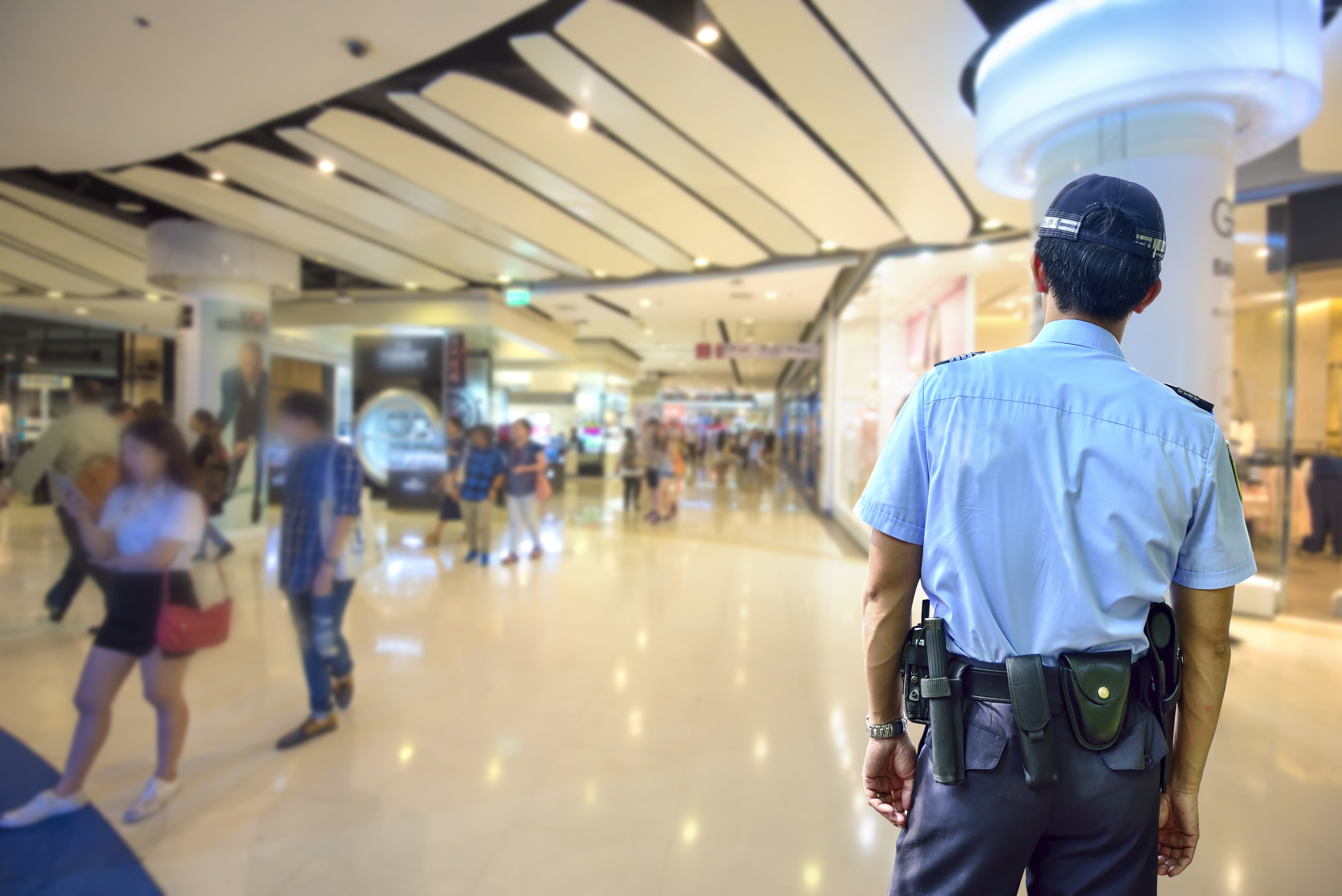
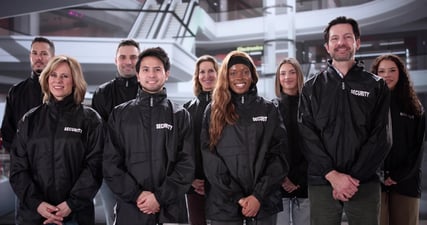
Professional shopping [mall security guards](https://usisecurity.com/security-services/unarmed-security-officers/) help prevent crime, respond to emergencies, support tenants, assist customers, and coordinate with advanced security technologies to protect people, property, and business operations.
Whether managing a regional shopping center, lifestyle center, or outlet mall, commercial property owners increasingly view mall security as a core part of their overall risk management strategy.
This guide explains what mall security officers do, their primary responsibilities, and how today's retail security programs combine trained personnel with modern technology to create safer shopping environments.
### What Is Mall Security?
Mall security refers to the combination of trained security personnel, surveillance technology, emergency preparedness, and communication systems used to protect shoppers, tenants, employees, and commercial property within shopping centers and retail environments.
Modern mall security programs help:
- Prevent theft and vandalism
- Improve customer safety
- Support tenant operations
- Respond to emergencies
- Reduce liability
- Protect business continuity
### Mall Security Job Duties and Responsibilities
The duties and responsibilities of a mall security job are more extensive than many shoppers may assume.
#### Crime Prevention and Theft Deterrence
One of the most important responsibilities of mall security officers is preventing criminal activity before it happens. A professional security presence can deter shoplifting, vandalism, trespassing, and other disruptive and criminal behavior.
In retail environments, crime prevention isn't limited to catching offenders. Mall security guards also:
- Maintain a visible presence throughout the property
- Monitor high-traffic areas
- Observing parking lots and exterior spaces
- Coordinating with retailers about loss-prevention concerns
- Reporting suspicious behavior before an incident occurs
#### Conducting Regular Property Patrols
Patrols are one of the most effective ways to identify potential security concerns before they become larger problems. Consistent patrol activity shows tenants and visitors that security personnel are actively engaged in protecting the property.
Mall security officers conduct routine patrols throughout:
- Common areas
- Retail corridors
- Food courts
- Parking garages
- Surface parking lots
- Loading docks
- Exterior entrances and exits
And after business hours, patrol responsibilities often expand to include verifying doors are secured, inspecting restricted areas, and ensuring the shopping mall remains protected when consumers and retailers have gone home for the day.
#### Promoting Safety Throughout the Customer Journey
Mall security guards contribute to safety at every stage of visitors’ experience. Their responsibilities often include:
- Monitoring pedestrian traffic
- Assisting lost children and families
- Providing escorts when appropriate
- Supporting parking lot safety
- Identifying unsafe conditions
- Reporting maintenance concerns
The presence of professional security personnel can increase confidence among shoppers, employees, and tenants. When visitors feel safe, they're more likely to spend time at the mall and come back in the future.
#### Maintaining Order Through Visibility and De-escalation
The large crowds that pack malls on the [busiest shopping days](https://www.forbes.com/sites/joanverdon/2019/09/24/the-10-busiest-shopping-days-at-stores-does-anyone-still-care/), especially on weekends, during promotional events, and during the holiday shopping season, can heighten safety concerns.
Mall security guards are often the first point of contact when conflicts arise between customers, employees, or visitors. Effective officers rely on de-escalation techniques to resolve situations peacefully whenever possible.
Rather than immediately resorting to enforcement actions, trained officers focus on:
- Assessing the situation
- Communicating calmly and clearly
- Reducing tensions
- Separating involved parties when necessary
- Restoring normal operations with minimal disruption
A visible, approachable security presence helps reinforce a welcoming atmosphere while maintaining order throughout the property.
Experienced mall security professionals understand that many incidents are prevented long before they become emergencies. By maintaining a visible presence, building relationships with tenants and retail staff, recognizing behavioral warning signs, and communicating concerns early, trained officers can often de-escalate situations before they disrupt operations or threaten public safety.
#### Supporting Surveillance and Remote Monitoring Operations
Today's most effective mall security programs combine highly trained personnel with integrated security technologies.
While security officers continue monitoring surveillance systems on-site, many commercial properties now supplement traditional monitoring with [integrated video surveillance](https://usisecurity.com/technology/video-management/), [remote monitoring capabilities](https://usisecurity.com/technology/integrated-solutions/remote-monitoring-services/), and other advanced security technologies.
Security personnel may work alongside monitoring teams to:
- Review camera feeds
- Investigate alarms and verify suspicious activity
- Monitor entrances and exits
- Track incidents in real time
- Coordinate responses across the property
This layered approach improves situational awareness and helps security teams respond more efficiently to developing situations.
Many retail properties are also adopting integrated security technologies such as intelligent video analytics, centralized security management platforms, access control systems for restricted areas, and AI-powered communication tools. When combined with trained security personnel, these technologies provide property managers with greater visibility across their facilities while supporting faster, more informed decision-making during routine operations and emergency situations.
#### Delivering Customer Service and Tenant Support
Security officers frequently serve as ambassadors for the property.
Visitors often approach security personnel for assistance with:
- Directions
- Store locations
- Parking information
- Lost-and-found inquiries
- General property information
Security officers also interact regularly with tenants and store managers. These relationships improve communication and create opportunities to identify concerns before they become significant operational issues.
#### Emergency Preparedness and Incident Response
Whether responding to a medical emergency, fire alarm, severe weather event, suspicious package, or [active threat situations](https://nrf.com/blog/rise-in-retail-violence-concerns-requires-a-full-range-of-threat-preparedness), including active shooter incidents, mall security personnel are often the first individuals to assess the situation and initiate a coordinated response.
Effective emergency preparedness includes:
- Evacuation planning
- Emergency communications
- Crowd management
- Coordination with first responders
- Ongoing training and drills
During emergencies, clear communication is of the utmost importance. Large retail environments can be noisy, making it difficult for teams to relay instructions quickly and accurately.
Advanced communication technologies help improve coordination between officers, supervisors, and monitoring personnel. AI-powered push-to-talk systems, [such as TALON-PTT™](https://usisecurity.com/roanwell-corporation-partners-with-united-security-inc-to-introduce-talon-ptt-ai-powered-breakthrough-in-high-noise-communications/), help reduce background noise and improve message clarity in crowded or high-distraction environments.
When communication remains clear, security teams can respond more efficiently and help maintain order during rapidly evolving situations.
| Responsibility | Why It Matters |
| --- | --- |
| Patrol common areas | Deters criminal activity |
| Monitor surveillance | Identifies threats quickly |
| Assist shoppers | Improves customer experience |
| Respond to emergencies | Protects lives and property |
| Coordinate with retailers | Supports loss prevention |
| Document incidents | Improves accountability |
#### Mall Security as Part of a Broader Risk Management Strategy
For commercial property managers, mall security is about more than preventing isolated incidents. A successful [retail security program](https://usisecurity.com/industries/retail-security-services/) supports:
- Customer safety
- Tenant satisfaction
- Asset protection
- Business continuity
- Regulatory compliance
- Liability reduction
By integrating personnel and technology, property owners can improve visibility, strengthen emergency preparedness, and create safer environments for everyone at the property.
#### Why Professional Mall Security Matters
Effective mall security benefits everyone involved in the property.
For property managers, it reduces liability and operational disruption. For tenants, it creates a safer business environment. For shoppers, it builds confidence and encourages repeat visits. For security teams, it improves coordination, communication, and emergency response.
Professional security programs help protect both people and the long-term value of commercial retail properties.
### Frequently Asked Questions
Can mall security officers stop shoplifting?
Security officers can help deter theft, identify suspicious behavior, coordinate with retailers, and respond according to property policies and applicable laws.
Why are patrols important in shopping malls?
Regular patrols increase visibility, help identify security concerns early, support tenant operations, and demonstrate an active security presence.
How does technology improve mall security?
Video surveillance, remote monitoring, communication systems, and integrated security technologies provide greater situational awareness and help security teams respond more efficiently.
What role does communication play during emergencies?
Clear communication allows security personnel to coordinate responses, direct visitors, support evacuations, and share critical information with first responders.
How can property managers strengthen retail security programs?
The strongest programs combine trained security officers, modern surveillance technology, remote monitoring, emergency preparedness planning, and reliable communication tools to create a comprehensive security strategy.
How many security guards does a shopping mall need?
The appropriate number depends on factors such as mall size, visitor volume, operating hours, crime trends, tenant mix, parking facilities, and special events. Many commercial property owners conduct professional security assessments to determine appropriate staffing levels and technology requirements.
## Building a Safer Retail Environment
Mall security officers are an essential part of protecting retail properties, supporting tenant success, and creating positive experiences for shoppers.
When combined with surveillance systems, remote monitoring, communication technology, and emergency preparedness planning, security personnel significantly contribute to a comprehensive risk management strategy that protects people, property, and business operations.
Hiring the right mall security provider can significantly impact the safety, reputation, and performance of your retail property.
Download our free [Security Officer Hiring Checklist](https://inbound.usisecurity.com/security-officer-checklist) to learn what questions to ask, what qualifications to evaluate, and how to choose security personnel who can effectively protect your shopping center.
---
#### Tag:
[Security Officer Staffing](https://inbound.usisecurity.com/blog/topic/security-officer-staffing) [Mall Security Officers](https://inbound.usisecurity.com/blog/topic/mall-security-officers)
#### Share:
- [Follow us on Facebook](http://www.facebook.com/share.php?u=https://inbound.usisecurity.com/blog/shopping-mall-security-guards)
- [Follow us on Twitter](https://twitter.com/intent/tweet?url=https://inbound.usisecurity.com/blog/shopping-mall-security-guards&text=What%20Do%20Shopping%20Mall%20Security%20Guards%20Do)
- [Follow us on Linkedin](http://www.linkedin.com/shareArticle?mini=true&url=https://inbound.usisecurity.com/blog/shopping-mall-security-guards)
- [Follow us on Pinterest](http://pinterest.com/pin/create/button/?url=https://inbound.usisecurity.com/blog/shopping-mall-security-guards&text=What%20Do%20Shopping%20Mall%20Security%20Guards%20Do?description=Shopping%20malls%20remain%20some%20of%20the%20busiest%20public-facing%20commercial%20environments,%20serving%20thousands%20of%20visitors,%20employees,%20and%20tenants%20every%20day.%20Keeping%20those[...]&media=https://cdn2.hubspot.net/hubfs/2292367/AdobeStock_121452180-min.jpeg)
---
#### [5 Quick Security Camera Placement Tips Previous Post](https://inbound.usisecurity.com/blog/5-quick-security-camera-placement-tips)
#### [What Are the Common Security Vulnerabilities in Shopping Malls? Next Post](https://inbound.usisecurity.com/blog/security-vulnerabilities-in-shopping-malls)
### Leave a Reply
---
## Related Posts
[Security Officer Staffing](https://inbound.usisecurity.com/blog/topic/security-officer-staffing), [Security Officers](https://inbound.usisecurity.com/blog/topic/security-officers), [Security Officer Training](https://inbound.usisecurity.com/blog/topic/security-officer-training), [Mall Security Officers](https://inbound.usisecurity.com/blog/topic/mall-security-officers), [Private Security Officers](https://inbound.usisecurity.com/blog/topic/private-security-officers), [Event Security](https://inbound.usisecurity.com/blog/topic/event-security), [Hiring Security Officers](https://inbound.usisecurity.com/blog/topic/hiring-security-officers)
[USI Security](https://inbound.usisecurity.com/blog/author/usi-security) 29 January, 2020
#### [What Qualities Make a Great Security Officer?](https://inbound.usisecurity.com/blog/what-qualities-make-a-great-security-officer)
Are you looking to hire new security officers to protect your company? Not all security officer...
[Read More](https://inbound.usisecurity.com/blog/what-qualities-make-a-great-security-officer)
[Retail Security](https://inbound.usisecurity.com/blog/topic/retail-security), [Mall Security Officers](https://inbound.usisecurity.com/blog/topic/mall-security-officers)
[USI Security](https://inbound.usisecurity.com/blog/author/usi-security) 04 December, 2017
#### [5 Tips to Improve Retail Security During the Holidays](https://inbound.usisecurity.com/blog/5-tips-to-improve-retail-security-during-the-holidays)
The holiday season is peak season for retail. With an increase in shoppers in stores, there is also...
[Read More](https://inbound.usisecurity.com/blog/5-tips-to-improve-retail-security-during-the-holidays)
[Security Officer Staffing](https://inbound.usisecurity.com/blog/topic/security-officer-staffing), [Mall Security Officers](https://inbound.usisecurity.com/blog/topic/mall-security-officers)
[USI Security](https://inbound.usisecurity.com/blog/author/usi-security) 15 November, 2017
#### [5 Reasons to Hire Private Security Officers for Black Friday](https://inbound.usisecurity.com/blog/5-reasons-to-hire-private-security-guards-for-black-friday)
Black Friday is one of the most important days in retail. In 2016, over 100 million shoppers...
[Read More](https://inbound.usisecurity.com/blog/5-reasons-to-hire-private-security-guards-for-black-friday)
[](https://usisecurity.com/)
© 2026 | All Rights Reserved
[](https://usisecurity.com/about/certified-women-owned/)
Follow Us:
40 Shrewsbury Ave
Red Bank, NJ 07701
[800.874.6434](tel:8008746434)
Powered By

```json
{
"@context" : "https://schema.org",
"@type" : "BlogPosting",
"author" : {
"@type" : "Person",
"name" : "USI Security",
"url" : "https://inbound.usisecurity.com/blog/author/usi-security"
},
"dateModified" : "2026-07-27T07:19:10.123Z",
"datePublished" : "2017-09-08T13:10:10.000Z",
"headline" : "What Do Shopping Mall Security Guards Do?",
"image" : [ "https://inbound.usisecurity.com/hubfs/AdobeStock_121452180-min.jpeg" ],
"mainEntityOfPage" : {
"@id" : "https://inbound.usisecurity.com/blog/shopping-mall-security-guards",
"@type" : "WebPage"
},
"publisher" : {
"@type" : "Organization",
"logo" : {
"@type" : "ImageObject",
"url" : "https://inbound.usisecurity.com/hubfs/social-suggested-images/logo-34.png"
},
"name" : "United Security Incorporated"
}
}
```